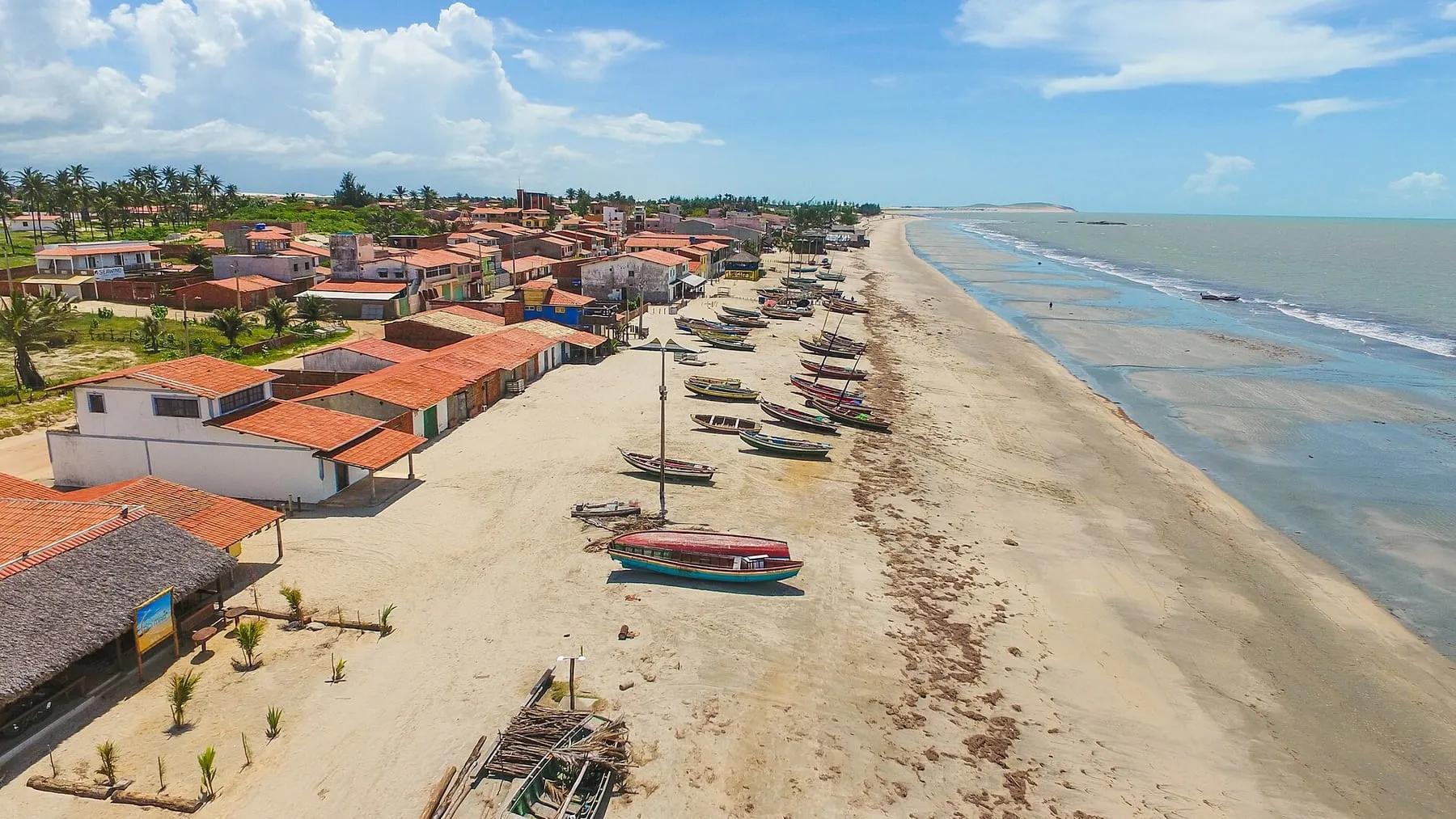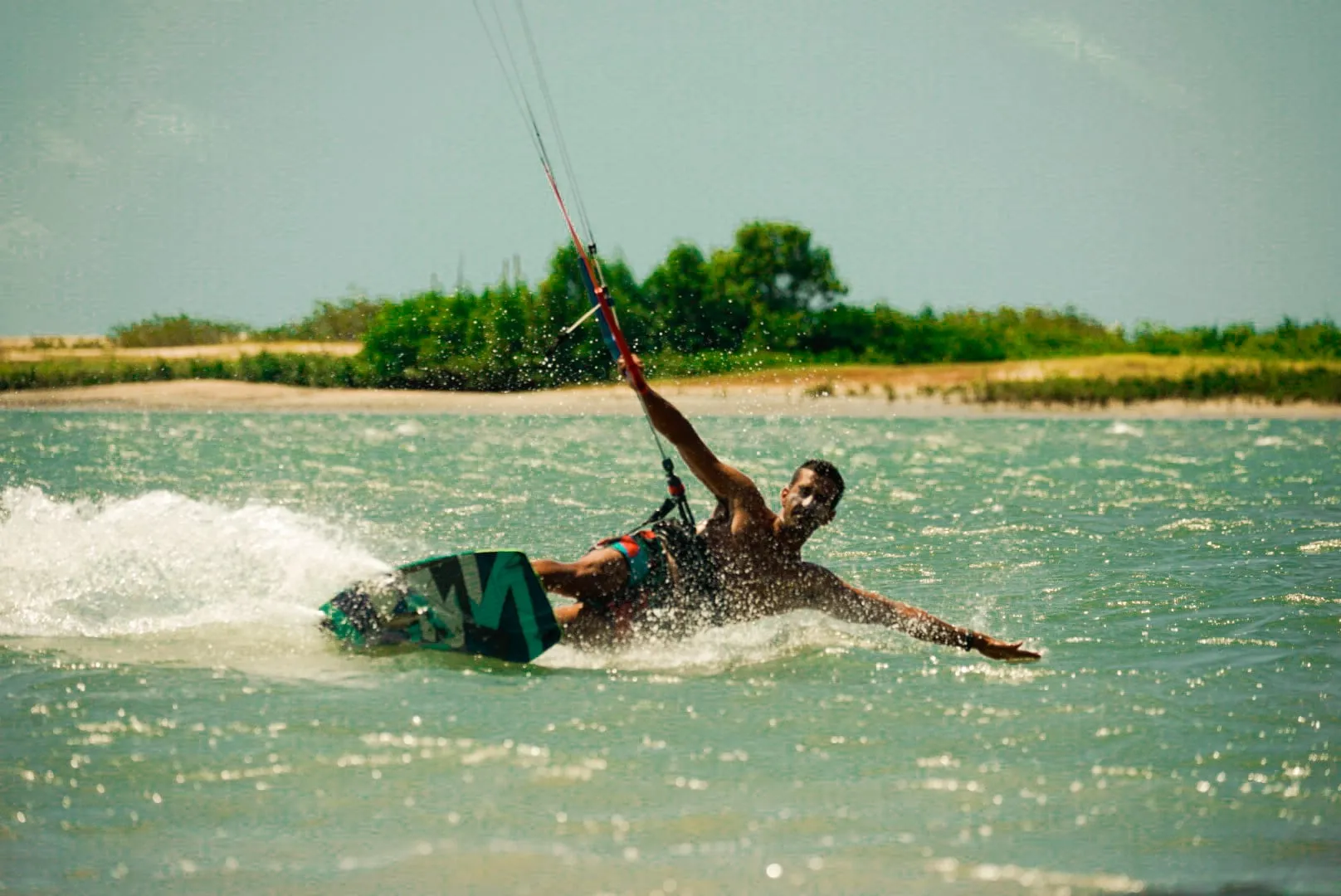
Jericoacoara is probably the most famous name in Brazilian kitesurfing. The village of sand streets, the Sunset Dune and Rock Arch attract tourists from around the world—and the season’s consistent wind attracts riders. A few kilometers away is Preá, one of the most sought-after beaches for those who kitesurf.
The spots
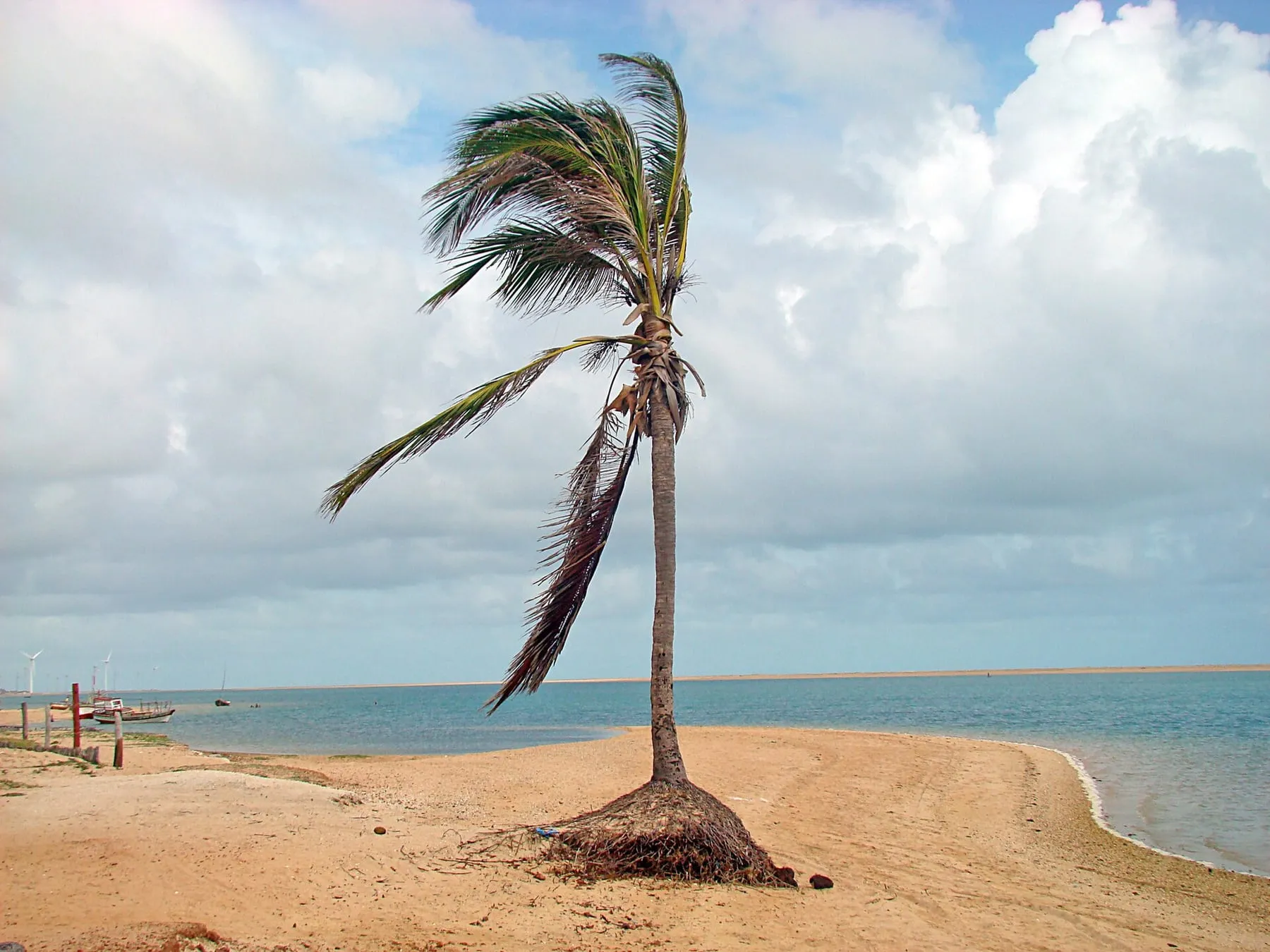
- Preá: strong, consistent wind and stretches of shallow water. It’s home base for many riders and the starting point of the classic downwind to Jeri.
- Jeri Beach: in front of the village, with open sea. Busy, requires attention to swimmers.
- Malhada: beach next to the village, with waves and rocks. For experienced riders only.
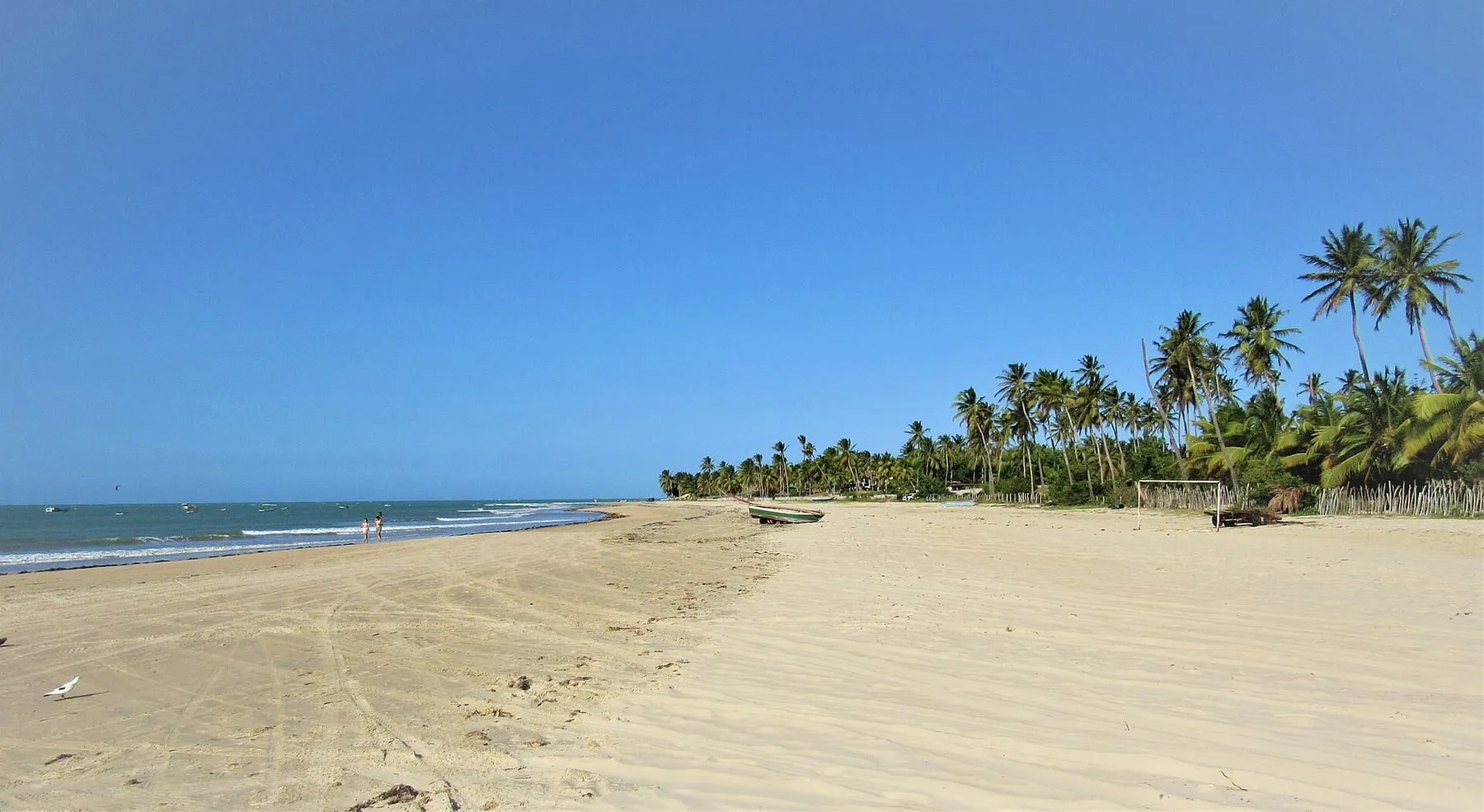
- Guriú: to the west, near the river mouth, calmer with fewer people in the water. Destination of the downwind leaving Jeri.
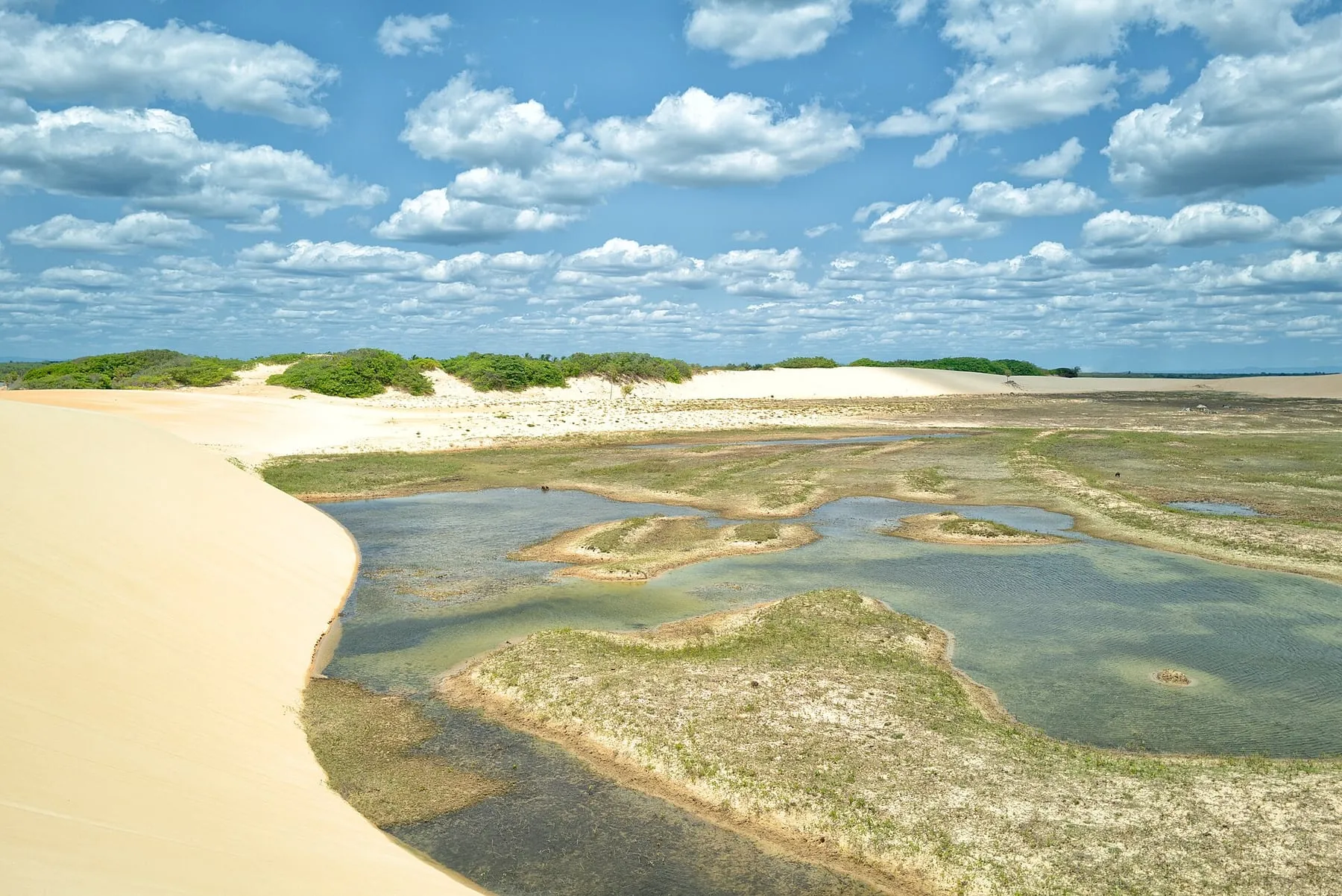
- Lagoa do Paraíso: shallow, calm water with steady wind in season. Good for improving and practicing tricks.
Downwinds
Jeri is one of Brazil’s best places for downwind. The two classics are Preá → Jeri and Jeri → Guriú, always with an instructor and 4x4 support on the sand. To go further, some continue to Tatajuba. Read our downwind guide for Ceará.
For whom
Jeri has options for all levels: lagoons and shallow stretches for beginners, open sea for experienced riders and waves at Malhada for the most skilled.
Best season
Season generally runs from July to January, with the most consistent months between August and November. There are good days outside this period, but less regularly.
How to get there
Jericoacoara Airport, in Cruz, is about 40 minutes from the village. Another option is to fly to Fortaleza and transfer (4 to 6 hours). Regular cars don’t enter the village: the final stretch is by authorized 4x4, and there’s a daily tourism fee charged.
Tips
- Move around the village on foot or electric bike.
- Book lessons early in your trip: if you like it, you’ll still have time for more.
- For everything about the village (tours, lagoons, sunset), see our local partner’s guide, kitejeri.com.
Wind month by month
Model forecast for the sea off the spot. Data: MET Norway (yr.no), CC BY 4.0.
Average wind between 10:00 and 17:00, when sessions happen, and the share of days with an average of 15 knots or more.
% of days averaging 15 knots or more: <30% 30–54% 55–79% 80%+· Average wind: knots
| — | Average wind (knots) | Days with 15+ knots |
|---|---|---|
| jan | 13.6 | 35% |
| feb | 12.2 | 24% |
| mar | 10.5 | 5% |
| apr | 11.0 | 15% |
| may | 13.5 | 32% |
| jun | 14.9 | 56% |
| jul | 15.9 | 68% |
| aug | 18.1 | 90% |
| sep | 19.5 | 99% |
| oct | 18.8 | 92% |
| nov | 17.5 | 85% |
| dec | 16.1 | 71% |
Source: 10-year history (ERA5) via Open-Meteo, CC BY 4.0, measured at sea off the spot. This is a climate average, not a forecast. On the beach the wind can differ by a few knots due to thermal and terrain effects. For the coming days, check a forecast such as Windguru or Windfinder.
Photos of the spot